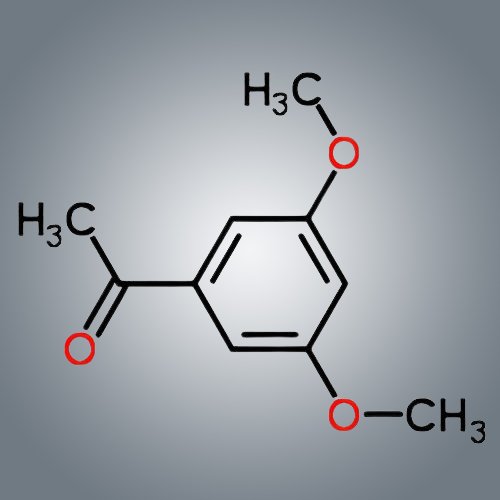
| CAS Number |
2478-38-8 |
| Molecular Weight |
196.20 g/mol |
| Appearance |
White to off-white, pale yellow, or beige powder or crystals
|
| Purity |
≥ 97% to 98% (laboratory grade)
|
| Melting Point |
124 – 127 °C
|
| Solubility |
Slightly soluble in water;
readily soluble in DMSO, methanol, and ethanol
|
| Packing |
Powder form: 25 Kg HEDP bag with 2 inner liners
(5-layer protected packaging)
|
| Synonyms |
4′-Hydroxy-3′,5′-dimethoxyacetophenone,
Acetosyringenin,
4-Hydroxy-3,5-dimethoxyacetophenone
|
| Shelf Life |
Up to 3 years when stored in a cool, dark, and dry place,
preferably at 2 – 8 °C.
|
| Uses |
Used in laboratory research to activate
Agrobacterium tumefaciens for plant transformation
protocols. Also applied in the synthesis of potential
anticancer agents and studied as a naturally occurring plant
compound involved in plant-pathogen recognition.
|