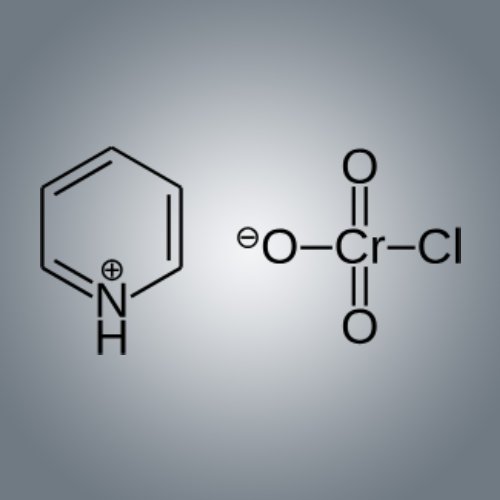
| CAS Number |
26299-14-9 |
| Chemical Formula |
C5H6ClCrNO3 |
| Molecular Weight |
215.56 g/mol |
| Appearance |
Bright orange to orange-red crystalline powder |
| Melting Point |
205 °C |
| Purity |
≥ 98.0% |
| Solubility |
Soluble in Dichloromethane (DCM), Acetone, and Acetonitrile.
Commonly used as a suspension in DCM.
|
| Safety Information |
Highly toxic, carcinogenic, and strong oxidizing agent.
Classified as hazardous heavy metal waste.
|
| Packing |
25 Kg or 50 Kg drums (standard for pharmaceutical
intermediate manufacturing)
|
| Synonyms |
PCC,
Corey–Suggs Reagent,
Pyridinium monochlorotrioxochromate (VI),
Chlorochromic acid, pyridinium salt,
Pyridinium chlorotrioxochromate
|
| Uses |
Used as a mild and selective oxidizing agent in organic synthesis,
especially for converting primary alcohols to aldehydes without
further oxidation.
|